Solo Yoga vs Partner Yoga: Which Keeps You More Motivated at Home?
What You’ll Learn
In this article, we’ll delve into the key differences between Solo Yoga and Partner Yoga, examining how each practice influences motivation, accountability, social interaction, physical benefits, emotional impact, and practical considerations. By the end, you’ll have a clear understanding of which practice aligns best with your personal goals and lifestyle.
Quick Comparison Table
| Feature | Solo Yoga | Partner Yoga |
|---|---|---|
| Motivation and Accountability | Self-motivated; may lack external accountability. | Mutual encouragement; shared goals enhance commitment. |
| Social Interaction | Solitary practice; limited social engagement. | Enhanced communication; strengthens relationships. |
| Physical Benefits | Personalized intensity; self-paced progress. | Assisted stretching; improved balance and strength. |
| Emotional Impact | Self-reflection; potential for isolation. | Increased trust; deeper emotional connection. |
| Practical Considerations | Flexible schedule; minimal setup required. | Requires a partner; coordination needed. |
Overview of Solo Yoga
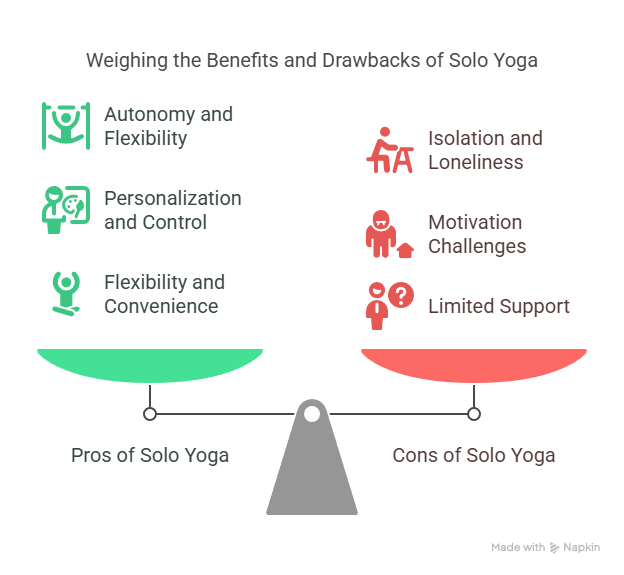
Solo Yoga is a personal practice where individuals engage in yoga routines independently, allowing for a self-paced and introspective experience.
Pros
– **Autonomy**: Practice at your own pace and schedule.
– **Personalization**: Tailor routines to your specific needs and goals.
– **Flexibility**: No need to coordinate with others; practice anytime, anywhere.
Cons
– **Isolation**: Lack of social interaction may lead to feelings of loneliness.
– **Motivation Challenges**: Without external accountability, it can be easy to skip sessions.
– **Limited Support**: No immediate assistance with pose adjustments or corrections.
Overview of Partner Yoga
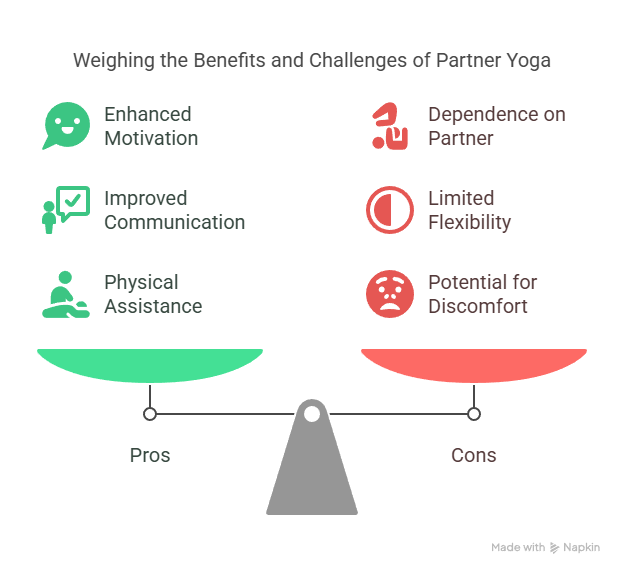
Partner Yoga involves two individuals practicing yoga together, collaborating to perform poses that require mutual support and synchronization.
Pros
– **Enhanced Motivation**: Mutual encouragement and shared goals increase commitment.
– **Improved Communication**: Requires clear verbal and non-verbal communication, strengthening bonds.
– **Physical Assistance**: Partners can help deepen stretches and correct alignments.
Cons
– **Dependence on Partner**: Requires coordination and availability of a partner.
– **Limited Flexibility**: Practice times and routines may need to align with your partner’s schedule.
– **Potential for Discomfort**: Physical closeness may not be comfortable for everyone.
Side-by-Side Breakdown
Motivation and Accountability
– **Solo Yoga**: Relies on self-motivation; without external accountability, it’s easy to skip sessions.
– **Partner Yoga**: Mutual encouragement and shared goals enhance commitment, making it harder to skip sessions.
Social Interaction
– **Solo Yoga**: Solitary practice with limited social engagement.
– **Partner Yoga**: Enhanced communication and collaboration strengthen relationships.
Physical Benefits
– **Solo Yoga**: Allows for personalized intensity and self-paced progress.
– **Partner Yoga**: Assisted stretching and support can lead to improved balance and strength.
Emotional Impact
– **Solo Yoga**: Encourages self-reflection but may lead to feelings of isolation.
– **Partner Yoga**: Builds trust and fosters deeper emotional connections.
Practical Considerations
– **Solo Yoga**: Offers a flexible schedule with minimal setup required.
– **Partner Yoga**: Requires a partner and coordination, which may limit flexibility.
Which One Should You Choose?
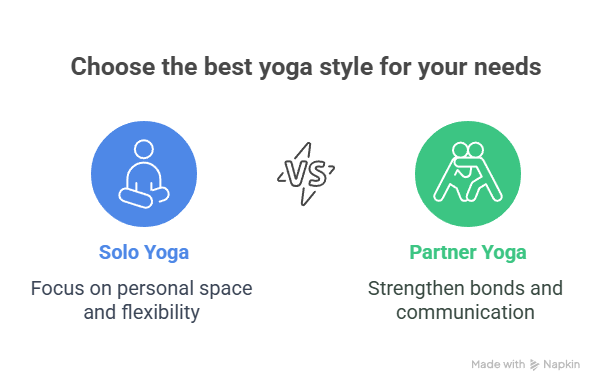
Your choice between Solo Yoga and Partner Yoga depends on your personal goals, lifestyle, and preferences.
– **Solo Yoga**: Ideal for individuals seeking personal space, flexibility, and self-paced practice without external distractions.
– **Partner Yoga**: Best for couples or close friends aiming to strengthen their bond, improve communication, and enjoy shared physical activity.
Solo Yoga vs Partner Yoga: The Final Verdict
| Category | Solo Yoga | Partner Yoga |
|---|---|---|
| Best for Beginners | Offers a self-paced introduction to yoga. | May require prior yoga experience for effective practice. |
| Best for Power Users | Allows for intense, personalized routines. | Provides opportunities for advanced partner poses and challenges. |
| Best Value | No need for a partner; practice anytime, anywhere. | Shared experience can enhance the value of the practice. |
Findings and Recap
Both Solo Yoga and Partner Yoga offer unique benefits. Solo Yoga provides autonomy and flexibility, allowing for a personalized practice. Partner Yoga fosters trust, communication, and emotional intimacy through shared practice. Consider your personal goals, relationship dynamics, and lifestyle when choosing the practice that best suits you.
Related reading: Exploring the Benefits of Yoga for Mental Health
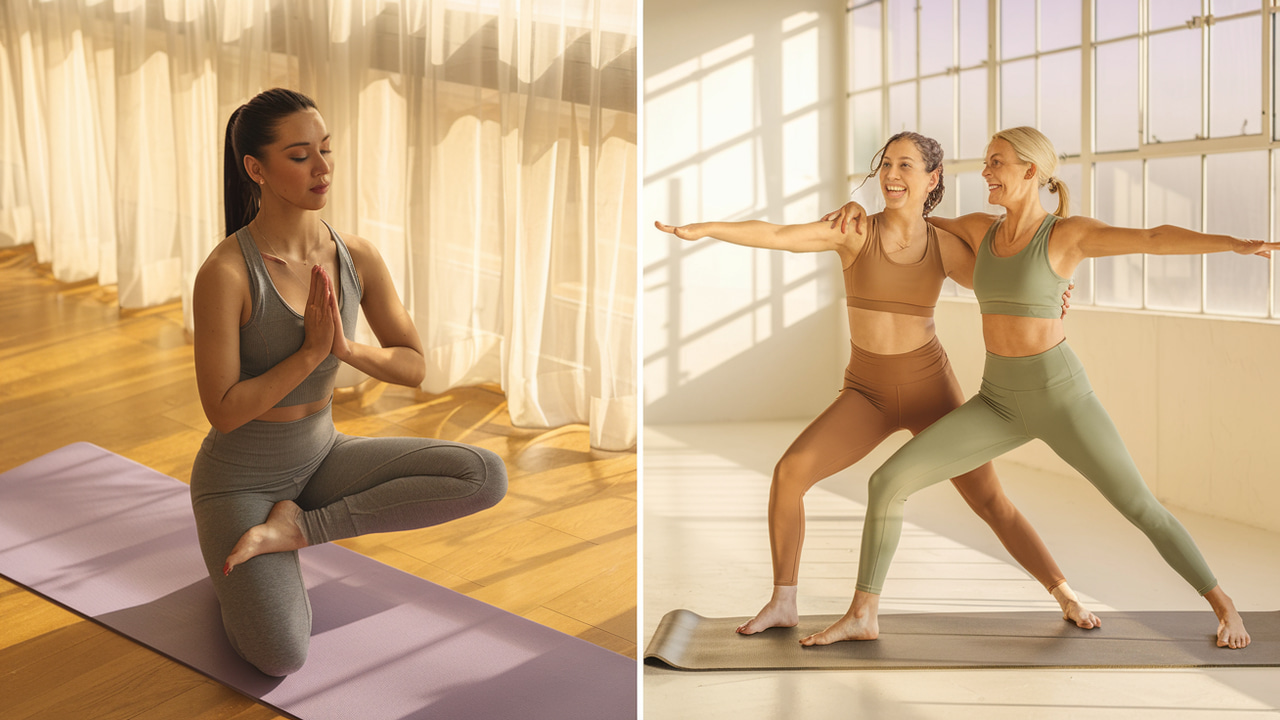
AI Image Prompt: A split-screen image showing a person practicing solo yoga in a serene home environment on one side, and a couple engaging in partner yoga poses in a bright, spacious room on the other, highlighting the contrast between individual and shared yoga practices.
“`html
Frequently Asked Questions
What is the main difference between Solo Yoga and Partner Yoga?
Solo Yoga is an individual practice focusing on personal alignment and self-awareness, while Partner Yoga involves two individuals working together to perform poses, enhancing connection, trust, and communication. ([thrivejourney.com](https://thrivejourney.com/blog/couples-yoga-movement/?utm_source=openai))
What are the benefits of practicing Partner Yoga?
Partner Yoga offers several benefits, including improved communication, enhanced flexibility and strength, increased trust and intimacy, and a fun, playful experience that deepens emotional connections. ([gqindia.com](https://www.gqindia.com/content/what-is-partner-yoga-and-is-it-for-you?utm_source=openai))
Can beginners practice Partner Yoga?
Yes, beginners can practice Partner Yoga. Starting with simple poses and clear communication helps build a foundation for more complex movements, making it accessible for all levels. ([plentyoga.com](https://plentyoga.com/blogs/blog/partner-yoga-benefits-and-how-to-practice-with-a-partner?utm_source=openai))
Do I need a romantic partner to practice Partner Yoga?
No, Partner Yoga can be practiced with any partner, including friends or family members. It’s a great way to build stronger communication and connection within various relationships. ([himalayayogi.com](https://himalayayogi.com/partner-yoga-or-pair-yoga/?utm_source=openai))
How does Partner Yoga enhance trust and communication?
Partner Yoga requires clear communication and mutual support, fostering a deeper sense of trust and understanding between partners as they work together to achieve poses. ([plentyoga.com](https://plentyoga.com/blogs/blog/partner-yoga-benefits-and-how-to-practice-with-a-partner?utm_source=openai))
What are some beginner-friendly Partner Yoga poses?
Beginner-friendly Partner Yoga poses include seated forward bends, back-to-back breathing, and simple balance poses that help establish connection and trust between partners. ([plentyoga.com](https://plentyoga.com/blogs/blog/partner-yoga-benefits-and-how-to-practice-with-a-partner?utm_source=openai))
Is Partner Yoga suitable for all fitness levels?
Yes, Partner Yoga is suitable for all fitness levels. It can be adapted to accommodate different abilities, making it an inclusive practice for everyone. ([plentyoga.com](https://plentyoga.com/blogs/blog/partner-yoga-benefits-and-how-to-practice-with-a-partner?utm_source=openai))
“`