
Smartwatch Tracking vs Manual Journaling: Which is Better for Yoga Progress?
What You’ll Learn
In this article, we’ll delve into two popular methods for tracking yoga progress: Smartwatch Tracking and Manual Journaling. We’ll compare their features, benefits, and drawbacks to help you determine which approach aligns best with your yoga practice and personal goals.
Quick Comparison Table
| Feature | Smartwatch Tracking | Manual Journaling |
|---|---|---|
| Data Tracking | Continuous monitoring of heart rate, posture, breathing patterns, and calories burned during yoga sessions. | Manual recording of session details, personal reflections, and progress notes. |
| Real-Time Feedback | Instant alerts and suggestions based on physiological data to adjust practice intensity. | Delayed insights based on personal reflections and self-assessment. |
| Customization | Limited to device settings and app configurations. | Highly customizable with personalized entries, sketches, and notes. |
| Integration | Syncs with fitness apps and health platforms for comprehensive data analysis. | Standalone without digital integration, focusing on personal experience. |
| Cost | Initial investment in wearable device; potential subscription fees for app services. | Minimal cost; requires only a journal and writing tools. |
Overview of Smartwatch Tracking
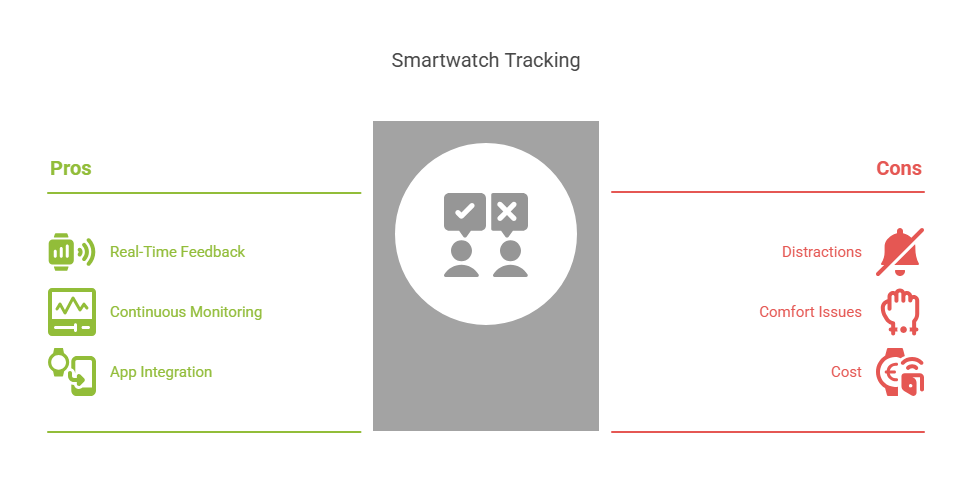
Smartwatch Tracking involves using wearable devices equipped with sensors to monitor various metrics during yoga sessions. These devices can track heart rate, posture, breathing patterns, and calories burned, providing real-time data to enhance your practice.
Pros
– **Real-Time Feedback**: Receive instant alerts and suggestions based on physiological data to adjust practice intensity.
– **Continuous Monitoring**: Track metrics continuously without manual input, offering a comprehensive view of your practice.
– **Integration with Apps**: Sync data with fitness apps and health platforms for detailed analysis and progress tracking.
Cons
– **Potential Distractions**: Notifications and alerts may disrupt the mindfulness aspect of yoga practice.
– **Comfort Issues**: Some wearables can be uncomfortable or restrictive during certain yoga poses.
– **Cost**: Initial investment in wearable devices and potential subscription fees for app services.
Overview of Manual Journaling
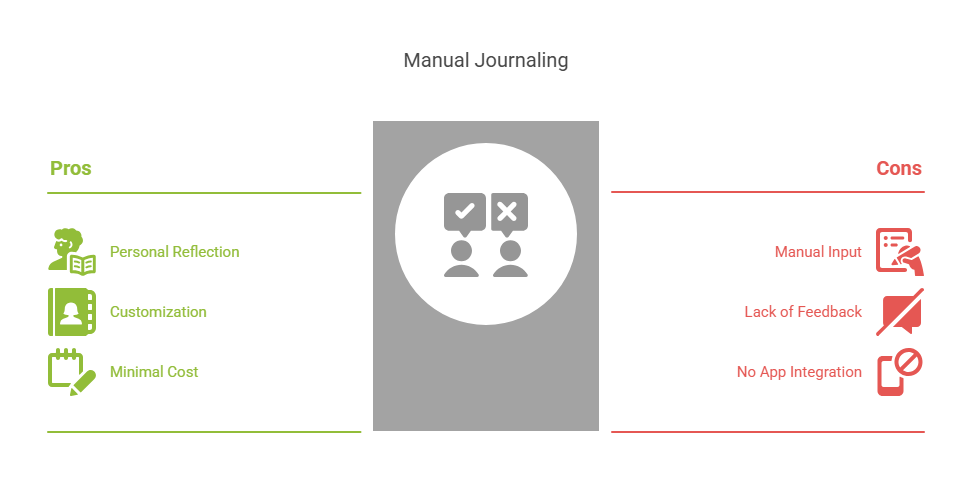
Manual Journaling involves recording your yoga experiences, reflections, and progress in a physical or digital journal. This method emphasizes personal reflection and mindfulness, allowing you to document your journey in your own words.
Pros
– **Personal Reflection**: Encourages mindfulness and self-awareness by reflecting on your practice.
– **Customization**: Highly customizable with personalized entries, sketches, and notes.
– **Minimal Cost**: Requires only a journal and writing tools, making it an affordable option.
Cons
– **Manual Input**: Requires time and effort to record details, which may be inconsistent.
– **Lack of Real-Time Feedback**: Insights are based on personal reflections and self-assessment, lacking immediate data.
– **No Integration with Apps**: Does not sync with digital platforms for comprehensive data analysis.
Side-by-Side Breakdown
Data Tracking
– **Smartwatch Tracking**: Provides continuous monitoring of heart rate, posture, breathing patterns, and calories burned during yoga sessions, offering a data-driven approach to assess performance.
– **Manual Journaling**: Involves manually recording session details, personal reflections, and progress notes, fostering a deeper connection with your practice through introspection.
Real-Time Feedback
– **Smartwatch Tracking**: Delivers instant alerts and suggestions based on physiological data, enabling immediate adjustments to practice intensity and form.
– **Manual Journaling**: Offers delayed insights based on personal reflections and self-assessment, promoting mindfulness and self-awareness over time.
Customization
– **Smartwatch Tracking**: Customization is limited to device settings and app configurations, focusing on data collection and analysis.
– **Manual Journaling**: Highly customizable with personalized entries, sketches, and notes, allowing for creative expression and detailed documentation.
Integration
– **Smartwatch Tracking**: Syncs with fitness apps and health platforms for comprehensive data analysis, providing a holistic view of your progress.
– **Manual Journaling**: Functions as a standalone practice without digital integration, emphasizing personal experience and reflection.
Cost
– **Smartwatch Tracking**: Involves an initial investment in wearable devices and potential subscription fees for app services, which can be a significant financial commitment.
– **Manual Journaling**: Involves minimal cost, requiring only a journal and writing tools, making it an accessible option for most practitioners.
Which One Should You Choose?
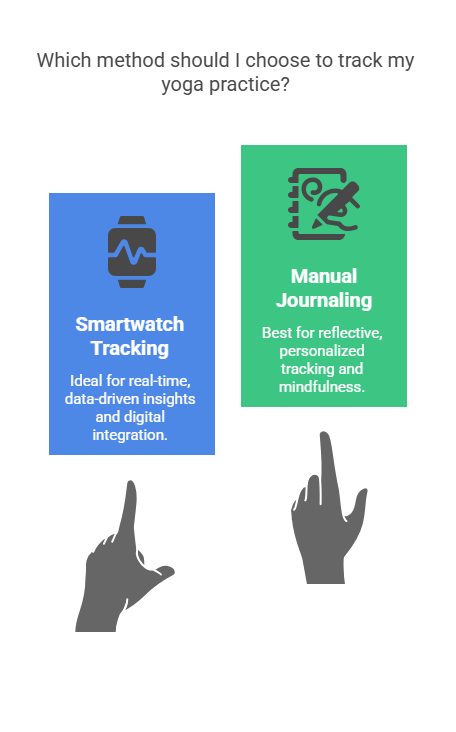
Your choice between Smartwatch Tracking and Manual Journaling depends on your personal preferences, goals, and the role you want technology to play in your yoga practice.
– **Smartwatch Tracking** is ideal for individuals seeking real-time, data-driven insights into their yoga practice, including heart rate, posture, and breathing patterns. It suits those who appreciate immediate feedback and integration with digital platforms.
– **Manual Journaling** is best for practitioners who prefer a reflective, personalized approach to tracking their yoga journey through manual entries and self-assessment. It appeals to those who value mindfulness, self-awareness, and the therapeutic benefits of writing.
Smartwatch Tracking vs Manual Journaling: The Final Verdict
| Category | Smartwatch Tracking | Manual Journaling |
|————————–|———————|——————-|
| Best for Beginners | ✓ | |
| Best for Power Users | ✓ | |
| Best Value | | ✓ |
Findings and Recap
In summary, both Smartwatch Tracking and Manual Journaling offer unique benefits for tracking yoga progress. Smartwatch Tracking provides real-time data and integration with digital platforms, making it suitable for those who prefer a tech-driven approach. Manual Journaling offers a personalized, reflective practice that fosters mindfulness and self-awareness, appealing to those who value introspection and simplicity.
Consider your personal goals, preferences, and the role you want technology to play in your yoga practice when making your choice. Remember, the best method is the one that aligns with your individual needs and enhances your overall yoga experience.
Ready to enhance your yoga practice? Explore our range of yoga accessories and journals to support your journey. Shop Now
Related reading: Integrating Technology and Tradition: Combining Smartwatch Data with Reflective Journaling for Holistic Yoga Tracking
AI Image Prompt: A split-screen image showing a person practicing yoga with a smartwatch on one side and writing in a journal on the other, symbolizing the choice between technology and tradition in yoga practice.
“`html
Frequently Asked Questions
What is the main difference between Smartwatch Tracking and Manual Journaling?
Smartwatch Tracking utilizes wearable technology to monitor health metrics such as heart rate, steps, and sleep patterns, providing real-time data and insights. Manual Journaling involves recording personal experiences, thoughts, and activities by hand, offering a reflective and personalized approach to self-monitoring. The choice between the two depends on whether you prefer automated data collection or a more introspective, hands-on method.
Can a smartwatch accurately track my health metrics?
Yes, many smartwatches are equipped with comprehensive health tracking features, including heart rate monitoring, step counting, and sleep analysis. High-end models like the Apple Watch and Garmin Fenix series offer advanced health monitoring capabilities that rival or even surpass those of dedicated fitness trackers. ([wearablewhiz.com](https://wearablewhiz.com/smartwatches-vs-fitness-trackers-which-is-right-for-you/?utm_source=openai))
What are the benefits of Manual Journaling over Smartwatch Tracking?
Manual Journaling offers deeper engagement through handwriting, which can improve memory retention and emotional processing. It provides a screen-free focus, reducing stress and promoting better sleep. Additionally, journaling allows for unlimited storage and the inclusion of multimedia elements like photos and sketches, offering a more personalized and creative outlet. ([pausa.co](https://www.pausa.co/blog/digital-vs-traditional-journaling-pros-and-cons?utm_source=openai))
Are there any drawbacks to using a smartwatch for health tracking?
While smartwatches offer a wide range of features, they may have shorter battery life compared to fitness trackers, often requiring daily or occasional charging. Additionally, the constant stream of notifications and access to apps can be a source of distraction, potentially hindering productivity or mindfulness. ([hewore.com](https://www.hewore.com/smartwatch-vs-fitness-tracker/?utm_source=openai))
Can I integrate data from my smartwatch into my Manual Journaling?
Yes, integrating data from your smartwatch into your manual journal can provide a comprehensive view of your health and activities. Some platforms offer automatic syncing of wearable data into digital journals, allowing for seamless tracking and analysis. ([practicebetter.io](https://practicebetter.io/blog/stay-in-sync-unlock-the-power-of-automatic-journaling-with-garmin-oura?utm_source=openai))
Which method is more cost-effective: Smartwatch Tracking or Manual Journaling?
Manual Journaling is generally more cost-effective, requiring only basic materials like notebooks and pens. In contrast, smartwatches can be a significant investment, with high-end models costing upwards of $800. ([hewore.com](https://www.hewore.com/smartwatch-vs-fitness-tracker/?utm_source=openai))
How do Smartwatch Tracking and Manual Journaling compare in terms of data privacy?
Manual Journaling offers complete control over your data, as it is stored privately without digital footprints. Smartwatch Tracking, however, involves data collection and storage by the device manufacturer or associated apps, which may raise privacy concerns depending on their data handling practices. It’s important to review the privacy policies of the smartwatch and associated applications to understand how your data is used and protected. ([washingtonpost.com](https://www.washingtonpost.com/technology/2021/09/25/helpdesk-smartwatch-how-to-guide/?utm_source=openai))
“`