Postnatal Yoga vs Regular Beginner Yoga: Which Practice Best Supports Your Wellness?
What You’ll Learn
In this comprehensive comparison, we’ll delve into the unique aspects of Postnatal Yoga and Regular Beginner Yoga, helping you understand which practice aligns best with your personal health and wellness goals.
Quick Comparison Table
| Feature | Postnatal Yoga | Regular Beginner Yoga |
|---|---|---|
| Focus Area | Postpartum recovery, rebuilding strength, emotional support | General flexibility and strength building |
| Target Audience | New mothers | Individuals new to yoga |
| Timing | 6–8 weeks postpartum, depending on individual circumstances | Any time, suitable for beginners |
| Class Structure | Incorporates baby-friendly poses for mother-infant bonding | Standard yoga poses without specific adaptations for infants |
| Health Considerations | Addresses pelvic floor recovery, diastasis recti, emotional well-being | Focuses on general physical fitness without postpartum-specific concerns |
Overview of Postnatal Yoga
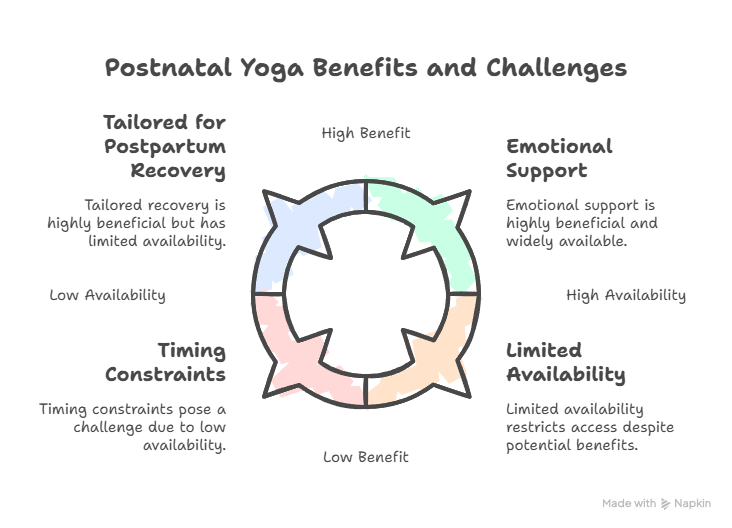
Postnatal Yoga is a specialized practice designed to support new mothers in their recovery after childbirth. It focuses on rebuilding strength, restoring energy, and promoting self-care during the postpartum period.
Pros
– **Tailored for Postpartum Recovery**: Addresses specific needs such as pelvic floor recovery and diastasis recti.
– **Emotional Support**: Provides a supportive environment to manage stress and anxiety.
– **Mother-Baby Bonding**: Many classes incorporate baby-friendly poses, fostering a deeper connection between mother and child.
Cons
– **Limited Availability**: Specialized classes may not be widely available.
– **Timing Constraints**: Typically recommended to start 6–8 weeks postpartum, which may not align with individual schedules.
Overview of Regular Beginner Yoga
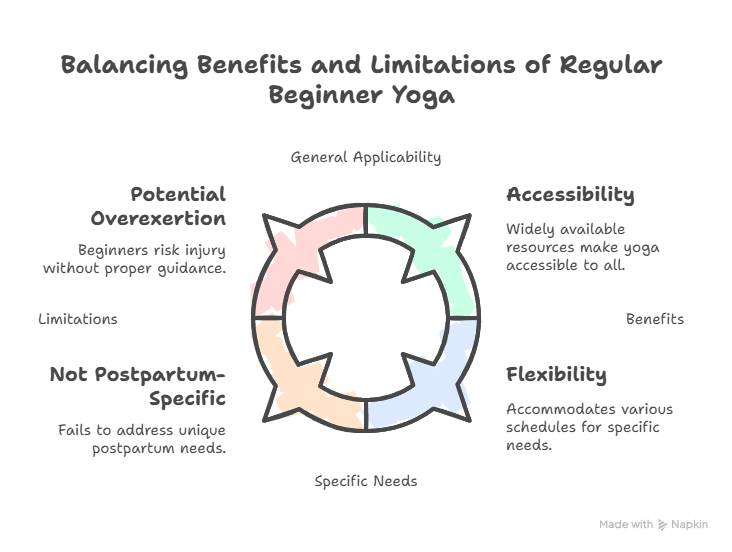
Regular Beginner Yoga is a general practice suitable for individuals new to yoga, focusing on building foundational skills in flexibility and strength.
Pros
– **Accessibility**: Widely available with numerous classes and resources.
– **Flexibility**: Can be started at any time, accommodating various schedules.
– **General Health Benefits**: Improves overall physical fitness and mental well-being.
Cons
– **Not Postpartum-Specific**: Does not address the unique needs of new mothers.
– **Potential Overexertion**: Without proper guidance, beginners may risk injury by attempting advanced poses prematurely.
Side-by-Side Breakdown
Focus Area
– **Postnatal Yoga**: Centers on postpartum recovery, rebuilding strength, and providing emotional support.
– **Regular Beginner Yoga**: Emphasizes general flexibility and strength building without specific focus on postpartum needs.
Target Audience
– **Postnatal Yoga**: Specifically designed for new mothers seeking recovery and support.
– **Regular Beginner Yoga**: Suitable for anyone new to yoga, regardless of life stage.
Timing
– **Postnatal Yoga**: Generally recommended to begin 6–8 weeks postpartum, depending on individual circumstances.
– **Regular Beginner Yoga**: Can be started at any time, with no specific timing requirements.
Class Structure
– **Postnatal Yoga**: Often includes baby-friendly poses, allowing mothers to bond with their infants during practice.
– **Regular Beginner Yoga**: Focuses on standard yoga poses without adaptations for infants.
Health Considerations
– **Postnatal Yoga**: Addresses specific postpartum concerns such as pelvic floor recovery, diastasis recti, and emotional well-being.
– **Regular Beginner Yoga**: Focuses on general physical fitness without postpartum-specific considerations.
Which One Should You Choose?
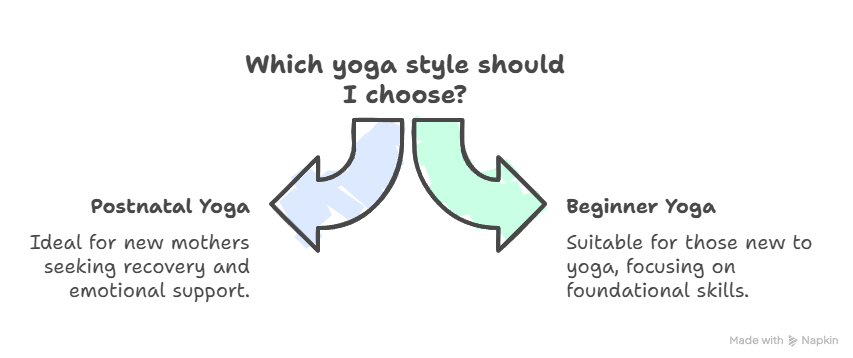
Your choice between Postnatal Yoga and Regular Beginner Yoga should align with your personal health goals and life stage.
– **If You’re a New Mother**: Postnatal Yoga is tailored to support your recovery and emotional well-being during the postpartum period.
– **If You’re New to Yoga**: Regular Beginner Yoga offers a flexible and accessible way to build foundational skills in yoga.
Postnatal Yoga vs Regular Beginner Yoga: The Final Verdict
| Category | Postnatal Yoga | Regular Beginner Yoga |
|————————–|—————-|———————–|
| Best for Postpartum Recovery | ✔️ | |
| Best for General Fitness | | ✔️ |
| Best for Mother-Baby Bonding | ✔️ | |
Findings and Recap
In summary, Postnatal Yoga is specifically designed to support new mothers in their recovery and emotional well-being during the postpartum period, while Regular Beginner Yoga offers a general practice suitable for anyone new to yoga. Your choice should be guided by your personal health goals and life stage.
Ready to embark on your yoga journey? Explore our recommended Postnatal Yoga and Regular Beginner Yoga classes to find the perfect fit for you.
Discover Postnatal Yoga Classes
Explore Regular Beginner Yoga Classes
Related reading: Understanding the Benefits of Postnatal Yoga
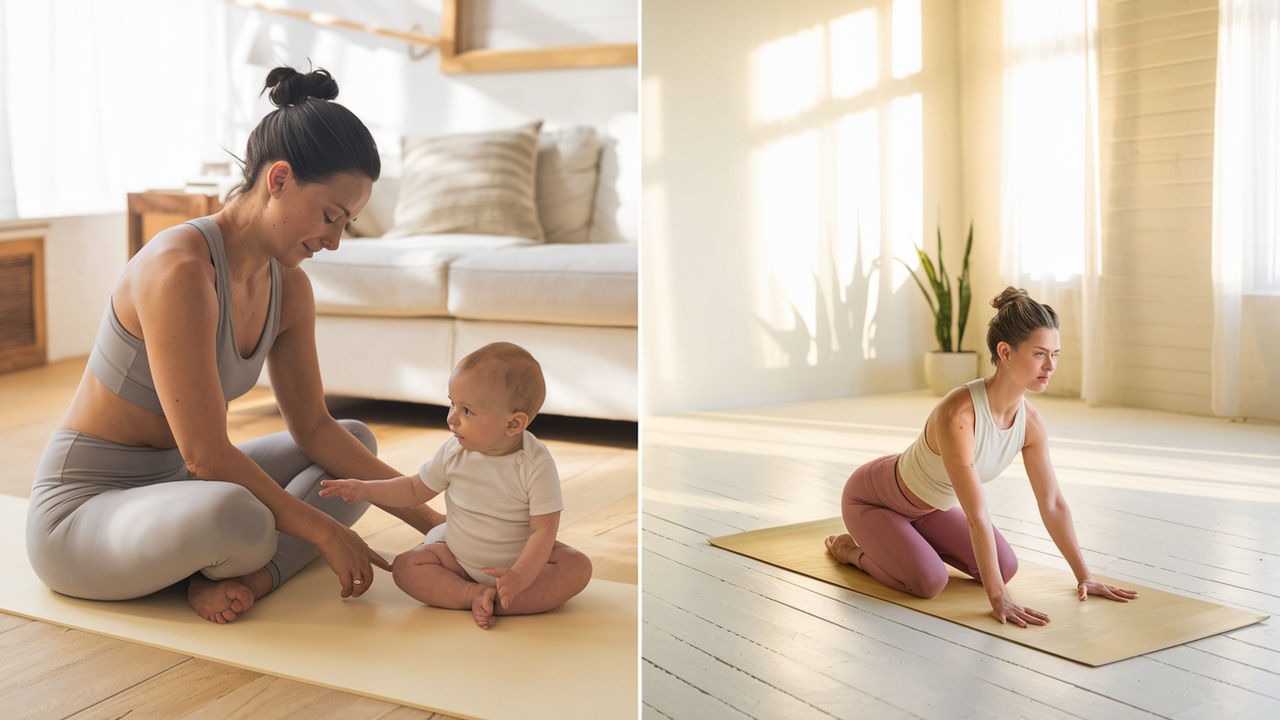
AI Image Prompt: A serene image of a new mother practicing yoga with her infant in a peaceful studio setting, highlighting the bond between mother and child.
“`html
Frequently Asked Questions
What is the main difference between Postnatal Yoga and Regular Beginner Yoga?
Postnatal Yoga is specifically designed to support new mothers in their recovery after childbirth, focusing on rebuilding core strength, pelvic floor recovery, and addressing postpartum discomforts. Regular Beginner Yoga, on the other hand, is a general practice suitable for individuals new to yoga, emphasizing overall flexibility, strength, and balance without specific postpartum considerations.
When is it safe to start Postnatal Yoga after childbirth?
It’s generally recommended to wait until the bleeding has stopped (usually around 4 weeks) after a vaginal birth. For cesarean births, it’s advisable to wait at least 6 weeks. Always consult with your healthcare provider before returning to yoga. ([austinyogalounge.com](https://www.austinyogalounge.com/postnatal-faq?utm_source=openai))
Do I need prior yoga experience to join a Postnatal Yoga class?
No prior yoga experience is necessary. Postnatal Yoga classes are designed to accommodate all levels, including beginners. ([austinyogalounge.com](https://www.austinyogalounge.com/postnatal-faq?utm_source=openai))
Can I bring my baby to Postnatal Yoga classes?
Yes, many Postnatal Yoga classes welcome babies of pre-crawling age, allowing for mother-baby bonding during the practice. ([austinyogalounge.com](https://www.austinyogalounge.com/postnatal-faq?utm_source=openai))
What are the benefits of Postnatal Yoga compared to Regular Beginner Yoga?
Postnatal Yoga offers benefits tailored to postpartum recovery, such as strengthening the pelvic floor, improving posture, and reducing stress and anxiety. Regular Beginner Yoga provides general benefits like increased flexibility, strength, and balance without specific postpartum focus. ([yogapedia.com](https://www.yogapedia.com/definition/10520/postnatal-yoga?utm_source=openai))
How can Postnatal Yoga help with postpartum depression?
Postnatal Yoga incorporates relaxation techniques, deep breathing, and mindfulness practices that can alleviate stress, anxiety, and symptoms of postpartum depression, promoting emotional well-being during the postpartum period. ([bodymethodology.com](https://www.bodymethodology.com/blog/benefits-of-postpartum-yoga?utm_source=openai))
Is it possible to practice Regular Beginner Yoga after childbirth?
Yes, it’s possible to practice Regular Beginner Yoga after childbirth, provided you have received clearance from your healthcare provider and feel physically ready. However, Postnatal Yoga is specifically tailored to address the unique needs of postpartum recovery.
“`