
Hot Yoga vs Regular Yoga: Which Is Right for You?
What You’ll Learn
In this article, we’ll delve into the fundamental differences between Hot Yoga and Regular Yoga, examining aspects such as:
– Temperature and Environment
– Calorie Burn and Weight Loss
– Flexibility and Range of Motion
– Hydration and Safety Considerations
– Mental and Emotional Benefits
By the end, you’ll have a clear understanding of which practice best suits your personal fitness objectives and preferences.
Quick Comparison Table
| Feature | Hot Yoga | Regular Yoga |
|---|---|---|
| Temperature and Environment | Practiced in a heated room (105°F, 40% humidity) to promote sweating and flexibility. | Conducted in standard room temperature settings, focusing on traditional yoga postures. |
| Calorie Burn and Weight Loss | Burns approximately 330-460 calories per 90-minute session; higher calorie burn due to heat-induced intensity. | Burns about 189 calories per 90-minute session; lower calorie burn compared to hot yoga. |
| Flexibility and Range of Motion | Enhanced flexibility gains due to warm environment allowing deeper stretches. | Gradual improvement in flexibility over time without the influence of heat. |
| Hydration and Safety Considerations | Increased risk of dehydration; requires careful attention to fluid and electrolyte balance. | Standard hydration needs; lower risk of dehydration. |
| Mental and Emotional Benefits | Enhanced focus and mental resilience under physical stress; may improve cardiovascular fitness. | Emphasis on mindfulness, stress reduction, and overall well-being. |
Overview of Hot Yoga
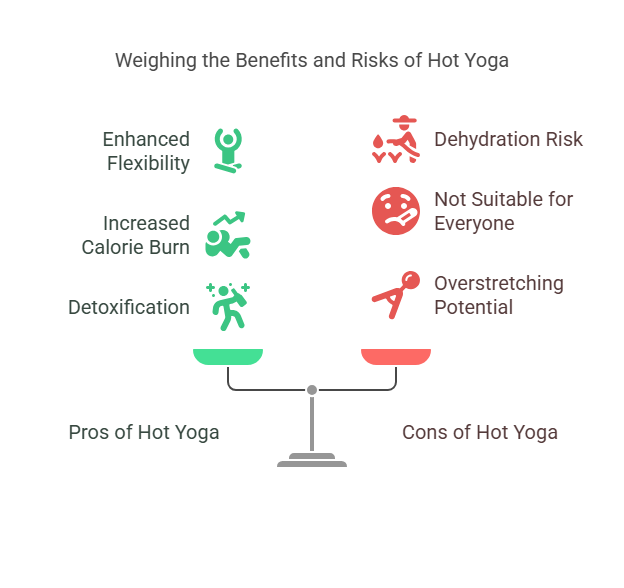
Hot Yoga is a dynamic practice performed in a heated environment, typically around 105°F (40°C) with 40% humidity. This setting aims to increase flexibility and promote detoxification through sweating.
Pros
– **Enhanced Flexibility**: The heat allows for deeper stretches, potentially leading to quicker improvements in flexibility.
– **Increased Calorie Burn**: The elevated temperature can elevate heart rate, leading to higher calorie expenditure during sessions.
– **Detoxification**: Profuse sweating may aid in flushing out toxins from the body.
Cons
– **Dehydration Risk**: The intense heat increases the risk of dehydration; practitioners must be vigilant about fluid and electrolyte intake.
– **Not Suitable for Everyone**: Individuals with certain health conditions, such as cardiovascular issues or heat sensitivity, may find hot yoga challenging or unsafe.
– **Overstretching Potential**: The warmth can make muscles more pliable, increasing the risk of overstretching and injury if not practiced mindfully.
Overview of Regular Yoga
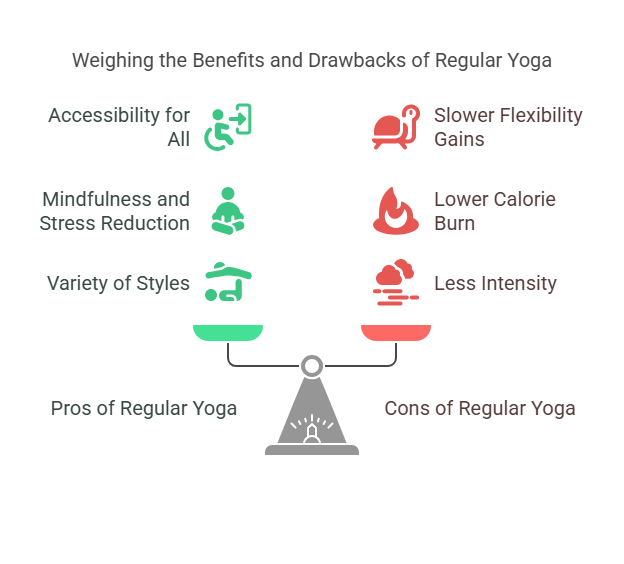
Regular Yoga encompasses various styles practiced in standard room temperatures. It focuses on postures, breathing techniques, and meditation to enhance physical and mental well-being.
Pros
– **Accessibility**: Suitable for individuals of all fitness levels and health conditions.
– **Mindfulness and Stress Reduction**: Emphasizes mental clarity, relaxation, and emotional balance.
– **Variety of Styles**: Offers a range of practices, from gentle stretches to vigorous workouts, catering to diverse preferences.
Cons
– **Slower Flexibility Gains**: Without the influence of heat, flexibility improvements may occur at a slower pace.
– **Lower Calorie Burn**: Generally burns fewer calories per session compared to hot yoga.
– **Less Intensity**: May not provide the same cardiovascular challenge as heated practices.
Side-by-Side Breakdown
Temperature and Environment
– **Hot Yoga**: Conducted in a heated room (105°F, 40% humidity) to promote sweating and flexibility.
– **Regular Yoga**: Practiced in standard room temperature settings, focusing on traditional yoga postures.
Calorie Burn and Weight Loss
– **Hot Yoga**: Burns approximately 330-460 calories per 90-minute session; higher calorie burn due to heat-induced intensity.
– **Regular Yoga**: Burns about 189 calories per 90-minute session; lower calorie burn compared to hot yoga.
Flexibility and Range of Motion
– **Hot Yoga**: Enhanced flexibility gains due to warm environment allowing deeper stretches.
– **Regular Yoga**: Gradual improvement in flexibility over time without the influence of heat.
Hydration and Safety Considerations
– **Hot Yoga**: Increased risk of dehydration; requires careful attention to fluid and electrolyte balance.
– **Regular Yoga**: Standard hydration needs; lower risk of dehydration.
Mental and Emotional Benefits
– **Hot Yoga**: Enhanced focus and mental resilience under physical stress; may improve cardiovascular fitness.
– **Regular Yoga**: Emphasis on mindfulness, stress reduction, and overall well-being.
Which One Should You Choose?

Your choice between Hot Yoga and Regular Yoga should align with your personal fitness goals, health status, and preferences.
– **Best for Beginners**: Regular Yoga offers a gentler introduction to yoga practices without the added intensity of heat.
– **Ideal for Weight Loss**: Hot Yoga may provide a higher calorie burn, potentially aiding in weight loss efforts.
– **Best for Mindfulness**: Regular Yoga emphasizes mental clarity and stress reduction, making it suitable for those seeking emotional balance.
Hot Yoga vs Regular Yoga: The Final Verdict
| Category | Winner |
|---|---|
| Best for Beginners | Regular Yoga |
| Best for Weight Loss | Hot Yoga |
| Best for Mindfulness | Regular Yoga |
Findings and Recap
Both Hot Yoga and Regular Yoga offer unique benefits. Hot Yoga provides an intense, heat-infused environment that can enhance flexibility and calorie burn, making it appealing for those seeking a vigorous workout. Regular Yoga, on the other hand, offers a more accessible and mindful practice, focusing on mental clarity and gradual physical improvement.
Consider your personal goals, health status, and preferences when choosing the practice that best suits you.
Related reading: Understanding the Benefits of Regular Yoga
AI Image Prompt: A serene yoga studio with two practitioners—one in a heated room performing hot yoga poses, and another in a standard room practicing regular yoga, highlighting the contrast between the two environments.
“`html
Frequently Asked Questions
What is the main difference between Hot Yoga and Regular Yoga?
The primary distinction lies in the practice environment. Hot Yoga is conducted in a heated room, typically between 90°F and 105°F, which can enhance flexibility and promote sweating. Regular Yoga is practiced in a standard, non-heated setting, focusing on posture alignment, breathing, and relaxation without the added intensity of heat. ([health.clevelandclinic.org](https://health.clevelandclinic.org/is-hot-yoga-right-for-me?utm_source=openai))
What are the benefits of practicing Hot Yoga?
Hot Yoga offers several potential benefits, including increased flexibility due to the warm environment, enhanced cardiovascular health from the elevated heart rate, and improved muscle strength. Additionally, the heat may aid in detoxification through increased sweating. ([health.clevelandclinic.org](https://health.clevelandclinic.org/is-hot-yoga-right-for-me?utm_source=openai))
Is Hot Yoga suitable for beginners?
While Hot Yoga can be accessible to beginners, it’s important to approach it cautiously. The elevated temperatures can be intense, so it’s advisable to start with regular yoga classes to build a foundation before transitioning to heated sessions. Always listen to your body and stay hydrated. ([health.clevelandclinic.org](https://health.clevelandclinic.org/is-hot-yoga-right-for-me?utm_source=openai))
Are there any risks associated with Hot Yoga?
Yes, potential risks of Hot Yoga include dehydration, heat exhaustion, and heatstroke, especially if proper hydration and precautions are not observed. Individuals with cardiovascular issues, pregnant women, or those sensitive to heat should consult a healthcare professional before participating. ([health.clevelandclinic.org](https://health.clevelandclinic.org/is-hot-yoga-right-for-me?utm_source=openai))
How does the calorie burn in Hot Yoga compare to Regular Yoga?
The heated environment in Hot Yoga can lead to increased calorie burn compared to Regular Yoga. However, the exact number of calories burned varies based on individual factors and the intensity of the session. It’s important to note that while the heat may contribute to higher calorie expenditure, the primary benefits of yoga come from the practice itself. ([time.com](https://time.com/5107737/hot-yoga-not-better-than-room-temperature/?utm_source=openai))
Can Hot Yoga help with weight loss?
Hot Yoga may aid in weight loss by increasing calorie burn due to the heat and intensity of the practice. However, weight loss results can vary among individuals, and it’s essential to combine regular practice with a balanced diet and healthy lifestyle for effective weight management. ([health.clevelandclinic.org](https://health.clevelandclinic.org/is-hot-yoga-right-for-me?utm_source=openai))
How should I prepare for a Hot Yoga class?
Preparation for a Hot Yoga class includes staying well-hydrated before, during, and after the session, wearing lightweight and moisture-wicking clothing, and bringing a towel and mat to manage sweat. It’s also advisable to eat a light meal a few hours before class and avoid heavy meals immediately before practicing. ([health.clevelandclinic.org](https://health.clevelandclinic.org/is-hot-yoga-right-for-me?utm_source=openai))
“`